The Word "Lake" Is Doing More Work Than You Think in West Bloomfield
September 17, 2026
September 17, 2026
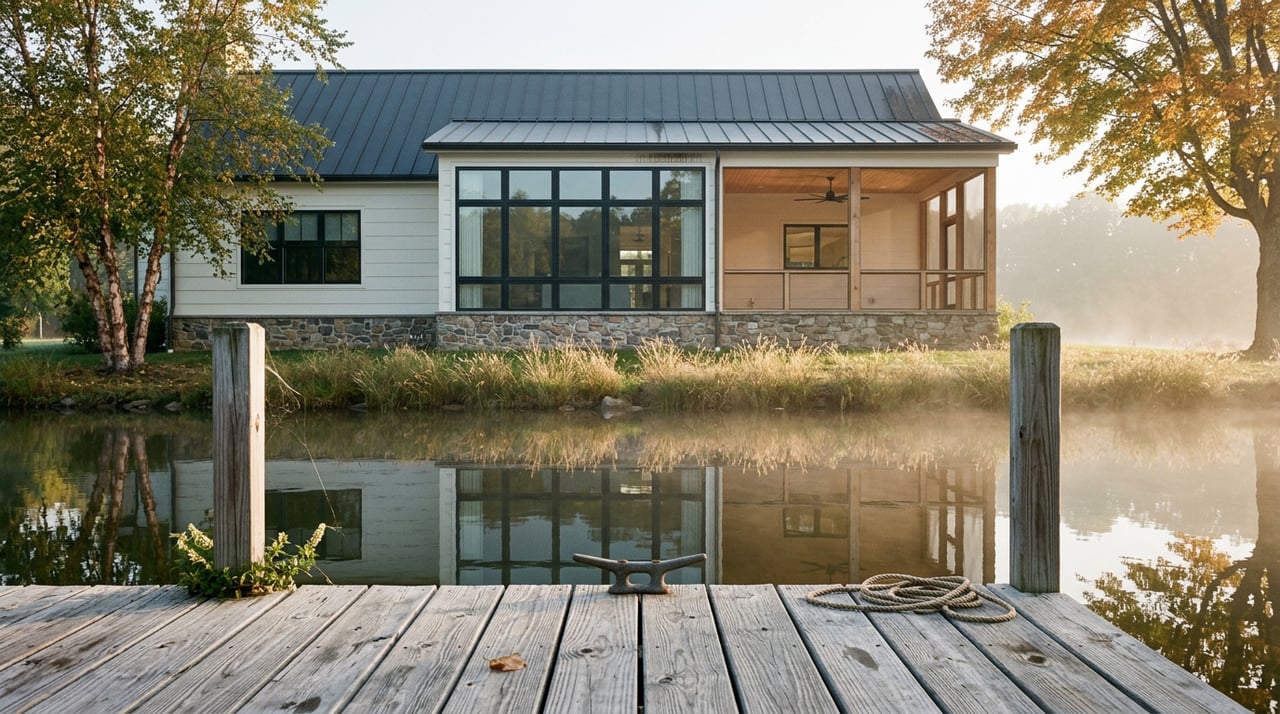
A buyer had already picked out the boat. The house sat on one of West Bloomfield's private lakes, the listing photos showed a dock stretching into blue water, and the deal felt close to done. Then someone pulled the lake association's governing documents before closing, and the dock in the photos turned out to exceed what the association actually permits. The buyer's intended use, and the boat that came with it, didn't fit the rules attached to the property.
Nothing about that story involves a bad house or a dishonest seller. It involves a word doing more work than most buyers realize. On a West Bloomfield listing, "lake" can mean three legally different things, and the difference between them, not the square footage, is often what actually explains why two homes that look nearly identical online carry price tags hundreds of thousands of dollars apart.
West Bloomfield Township sits across a cluster of named lakes, among them Pine Lake, Upper Straits Lake, Cass Lake, Orchard Lake, and Walnut Lake, and a listing that mentions any of them could mean:
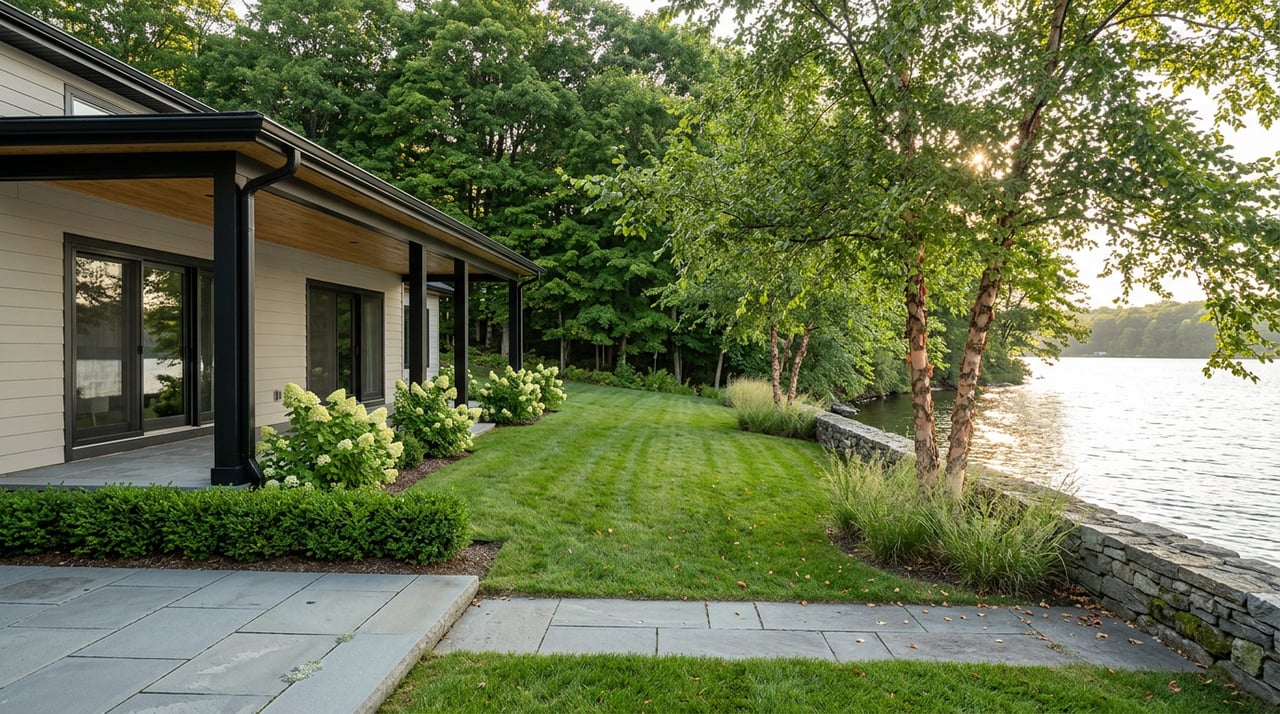
Lakefront, where the parcel itself carries deeded riparian frontage. The owner holds direct legal rights to the shoreline in front of their own lot.
Lake access or lake privileges, where the home sits in a subdivision that holds deeded rights to a separate beach or dock lot somewhere else on the lake. The owner never touches frontage on their own parcel, but the subdivision's association does, and membership passes those rights through.
Lake view, where none of the above applies. The water is visible from the property, but no dock, no beach, and no legal claim to the shoreline comes with it.
These aren't marketing flourishes. They're separate legal arrangements with separate deeds, separate governing documents, and separate price ceilings, and a buyer who assumes "near the lake" and "on the lake" are roughly the same thing is the buyer who ends up surprised at the closing table, or after it.
The associations that manage these rights are not interchangeable, and a buyer comparing two lakefront listings often needs to compare two entirely different membership structures underneath them.
Pine Lake, a 395-acre private all-sports lake, is managed by the Pine Lake Property Owners Association. Roughly 175 lakefront homes are eligible for membership directly, alongside thirteen separate homeowner and condo associations whose members pay dues to their own local association, which in turn holds a single membership in the PLPOA. Two businesses, Pine Lake Marina and Pine Lake Country Club, sit on the same shoreline. Dues fund a sheriff marine patrol contract and a lake management plan aimed at invasive weed control.
Inside that same footprint, the Pine Lake Estates subdivision runs two separate, mandatory associations for its own residents. The general homeowners' association, which handles snow plowing, entrance maintenance, and common areas, currently posts dues of $125 per household due each May 1. A second, entirely distinct beach association charges $200 or $250 per household depending on whether the property is granted boat access, with a senior discount available. A buyer here isn't joining one association. They're joining two, on top of whatever the county and township already assess.
Upper Straits Lake works differently again. It's a private, all-sports lake spanning roughly 323 acres across both West Bloomfield Township and the City of Orchard Lake Village, and unlike Pine Lake it has no single central lake association. Instead, several subdivisions run their own smaller associations covering just their stretch of shoreline. Bayside Beach, on the west end of the lake and established in 1950, is one example: new members currently pay a $500 first-year initiation fee plus $300 in annual dues, contribute six volunteer work hours per year, and join a waitlist that has run more than 40 households deep for a mooring slip, though a private boat launch remains available to all members regardless of slip status.
| Lake | Governing structure | What it typically costs to join | Boat access |
|---|---|---|---|
| Pine Lake | PLPOA umbrella, plus 13 subdivision or condo associations | Varies by subdivision; Pine Lake Estates runs $125 (general HOA) plus $200 to $250 (beach association) per household | Deeded, subdivision-dependent |
| Upper Straits Lake | No central association; several subdivision-level beach associations, all feeding into the lakewide Upper Straits Clean Lake Association | Bayside Beach currently lists $500 first-year initiation plus $300 annual dues | Deeded beach access; boat mooring often waitlisted |
The pattern across both lakes is the same. A buyer's actual dues obligation is rarely a single line. It's a stack, and the stack is different on every lake and often different from one subdivision to the next on the same lake.
There's a second layer that sits above all of this, and it doesn't live in any homeowners association at all. In 2022, the City of Orchard Lake Village and the Charter Township of West Bloomfield entered an intergovernmental agreement creating a Special Assessment District covering the waters of Upper Straits Lake, since the lake physically straddles both jurisdictions. An Aquatic Advisory Board, seated with officers from the Upper Straits Clean Lake Association, resident representatives from both communities, and one elected official from each municipality, now oversees weed harvesting, herbicide treatment, lake level management, and nuisance goose control for the entire lake, funded through the assessment district rather than through any single subdivision's dues.
That structure matters to a buyer for one practical reason: a special assessment tied to a multi-jurisdictional agreement like this typically shows up as a line on the property tax bill, not in the listing description. It's the kind of obligation that's easy to miss if you're pricing a home off the photos and the square footage alone, and easy to catch if you ask for the full tax history and current assessment roll before you write an offer.
Township-wide medians don't capture any of this, because they blend colonials, condos, and lakefront estates into a single number. Look instead at how price moves by access category. As of mid-2026, all-sports lakes carrying West Bloomfield's premium tier, Pine Lake, Orchard Lake, and Cass Lake among them, were seeing waterfront homes list between roughly $800,000 and $3 million or more. Pine Lake specifically, with its tighter footprint and infrequent turnover, was trading in the $600,000 to $1.2 million range, with buyers already watching whenever something new hits the market. By contrast, entry-tier no-wake lakes elsewhere in Oakland County, in communities like Waterford and Lake Orion, were listing in the $250,000 to $350,000 band for a comparable waterfront lifestyle without the all-sports designation, and mid-range lakes in Clarkston, Commerce, and White Lake fell between $400,000 and $900,000.
The spread isn't primarily about finishes or lot size. It's about which of the three access categories, and which all-sports classification, a given parcel actually carries. A home with true deeded frontage on an all-sports lake like Pine or Upper Straits is competing in a different price tier than a home with a distant view of the same water and no legal claim to it, even if the two houses share a zip code and a similar floor plan.
A buyer serious about a West Bloomfield lake property can avoid the dock scenario, and the tax bill surprise, with a short list of questions answered before the offer goes in:
Does "lake privileges" always include a place to keep a boat? Not necessarily. Some associations include boat docking, often with a waitlist for a limited number of slips, while others provide beach access only. The governing documents for that specific association answer the question, not the general term.
Are lake association dues optional? Usually not, once a property falls within a subdivision or association boundary. Membership is frequently mandatory and tied to the deed itself, which means it transfers with the property whether or not a new owner intends to use the water.
Can a homeowners association restrict a dock beyond what the state allows? Yes. State permitting rules set a floor for what's legally required on an inland lake, but a local association's governing documents can impose additional limits on dock size, placement, or the type of watercraft allowed, and those private restrictions are enforced separately from any state permit.
A West Bloomfield lake home can be one of the best purchases in Metro Detroit, but the value sits in the fine print as much as the shoreline. If you're comparing lake properties and want someone to read the association documents and the tax history before you fall for the dock in the photos, Jessica Young Stencel can walk you through exactly what a specific parcel includes, and request a free home valuation to see where your target property actually sits in this market.
Stay up to date on the latest real estate trends.